
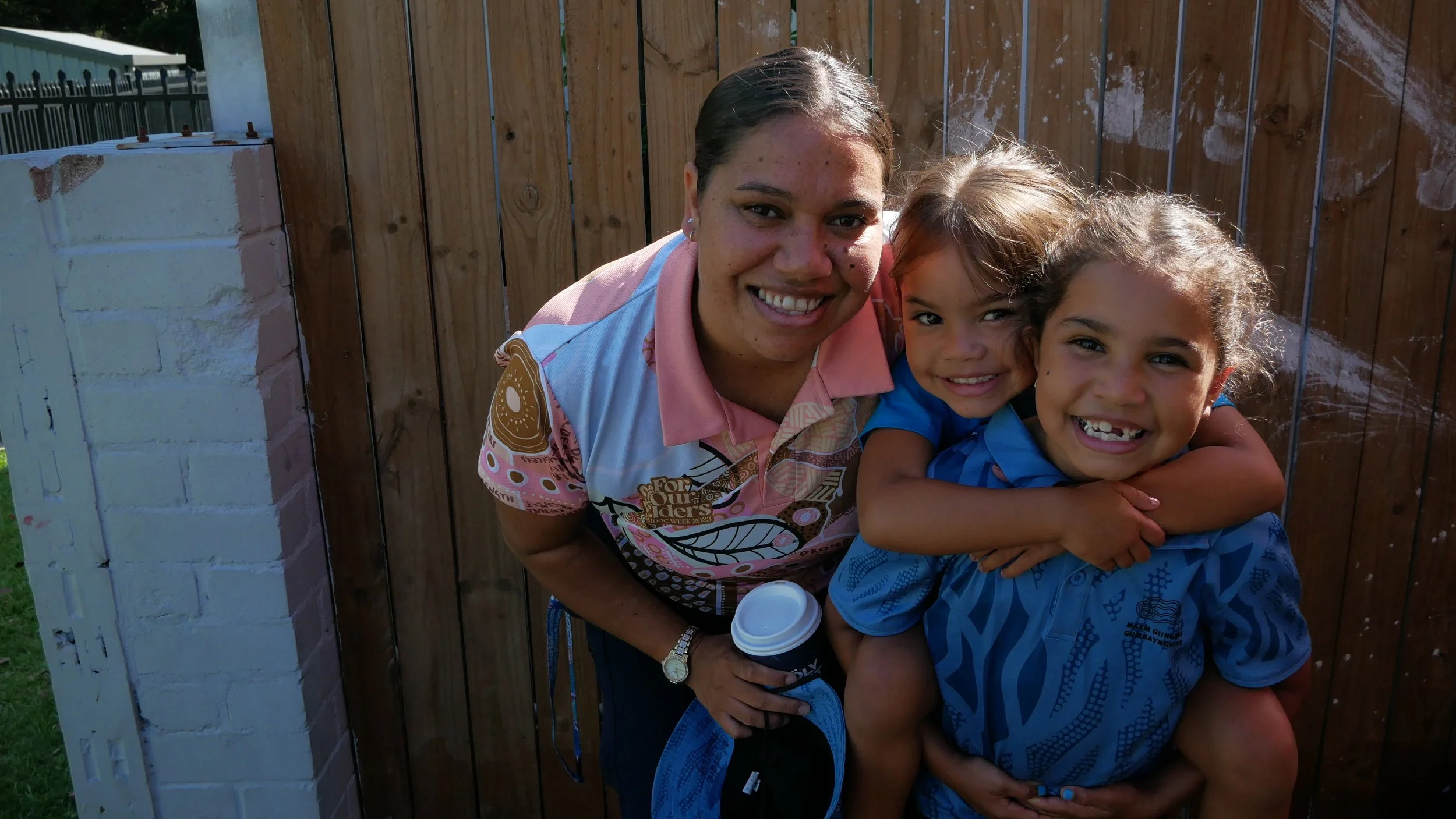
Immersion for Maam Giingana Gumbaynggirr
Who are you?
At Maam Giingana, we believe every child deserves the opportunity to grow up knowing who they are, where they come from and the language of their ancestors.
Language is much more than words. It carries culture, identity, history, knowledge and ways of understanding the world. When children learn their language, they are not only learning how to communicate—they are learning how to belong.
From 2027, Maam Giingana will begin a Gumbaynggirr language immersion program in Kindergarten. This marks an exciting new chapter in our school's journey and reflects our commitment to creating strong, confident and culturally grounded young people who can succeed in every aspect of life.
This tab has relevant documents that show the evidence of immersion and bilingual education.
“When we lose our languages, we lose our identity and our connection to our world. The need for First Language revitalisation efforts has never been more urgent, driven by a global call to action as enshrined in the UN's International Decade of Indigenous Languages (2022-2032).”
Language Immersion: Research & Resources
-
Thomas, W. P. & Collier, V. P.
A National Study of School Effectiveness for Language Minority Students' Long-Term Academic Achievement (2002)
One of the largest longitudinal studies on bilingual education ever conducted. It found that well-implemented dual language and immersion programs produced the strongest long-term academic outcomes.
Direct link Thomas & Collier Research Monographs
Thomas & Collier Research Library
Collection of peer-reviewed articles spanning more than 30 years of bilingual education research.
Direct link Professional Journal Articles (Thomas & Collier)
-
Cummins, J. (2000)
Language, Power and Pedagogy: Bilingual Children in the Crossfire
This is one of the most cited books explaining how literacy and cognitive skills transfer between languages (Common Underlying Proficiency).
Publisher:
Multilingual Matters – Language, Power and PedagogyGoogle Scholar:
Jim Cummins Google Scholar Profile -
UNESCO (2021)
The World's Languages: UNESCO Atlas and Indigenous Languages
Supports multilingual education and Indigenous language revitalisation globally.
UNESCO Languages and Multilingualism
UNESCO
If You Don't Understand, How Can You Learn?
Foundational report supporting mother-tongue education.
Direct link UNESCO Report – Local Language as a Key to Effective Learning (PDF)
-
Stephen May & Richard Hill (2005)
Bilingual/Immersion Education: Indicators of Good Practice
Commissioned by the New Zealand Ministry of Education.
This is considered one of the world's best reviews of Māori immersion education.
Direct link Education Counts – Bilingual/Immersion Education: Indicators of Good Practice
-
Wilson, W.H. & Kamanā, K.
Foundational work describing the ʻAha Pūnana Leo Hawaiian immersion movement.
University of Hawaiʻi: ʻAha Pūnana Leo
Kawaiʻaeʻa, K. et al.
Native Hawaiian Education
University of Hawaiʻi resource.
Ka Haka ʻUla O Keʻelikōlani College of Hawaiian Language
-
AIATSIS
National Indigenous Languages Report
Australia's leading authority on Aboriginal and Torres Strait Islander languages.
AIATSIS – Indigenous Languages
AIATSIS Discussion Paper
Gaps in Australia's Indigenous Language Policy
Excellent evidence supporting bilingual Indigenous education.
Direct link AIATSIS Discussion Paper (PDF)
-
National Agreement on Closing the Gap
Supports Aboriginal languages, culture and community-led education.
-
NSW Government policy and examples of implementation.
NSW Department of Education – Aboriginal Languages